WhatsApp for Travel Agencies: Enquiry to Itinerary
Travel enquiries take weeks to close and involve dozens of messages. How to qualify faster, share itineraries cleanly, and handle the in-trip support that earns referrals.
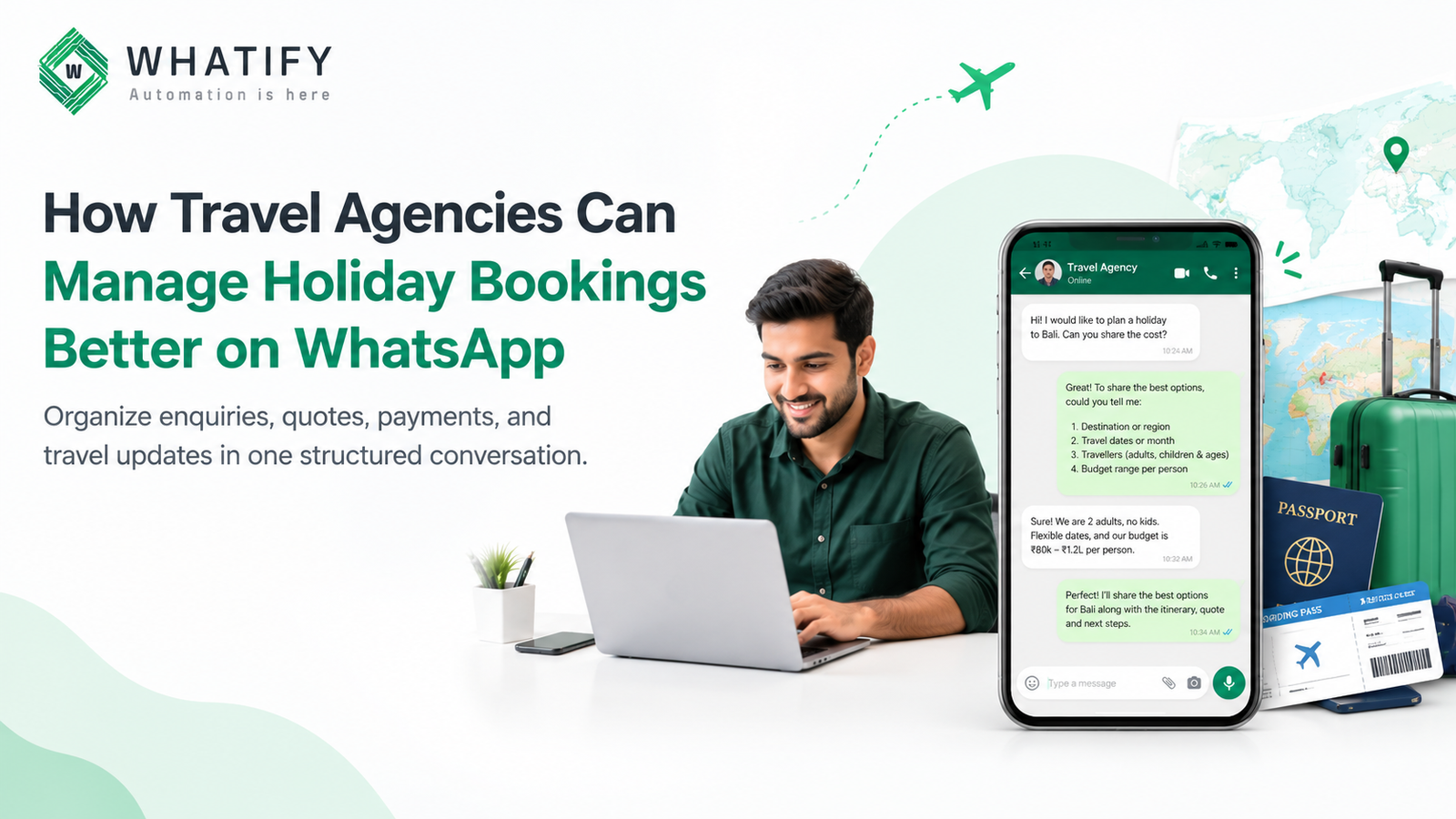
A holiday booking is a long conversation. Weeks pass between the first "what would Bali cost?" and a deposit, spread across dozens of messages, revised quotes and questions about visas. Most agencies already run this on WhatsApp — usually on a personal number, with no record of who said what.
The opportunity is not moving to WhatsApp. It is running the same conversation with structure.
Qualify in the first exchange
"What would Bali cost?" is unanswerable. Agents lose days going back and forth before they know enough to quote.
Ask four things upfront, with buttons where possible:
1. Destination or region — or "not decided", which is a real and valuable answer
2. Travel dates or month — flexible or fixed
3. Travellers — adults, children, and their ages if there are children
4. Budget range per person — brackets, not an open question
Budget brackets feel awkward to ask and save the most time. An agent who knows the range quotes once instead of three times.
Tag every enquiry with destination, month and budget band. That tagging is what makes later campaigns possible.
Route by intent, not arrival order
Not every enquiry deserves equal effort.
|
Signal |
Handling |
|
Fixed dates within 60 days, budget stated |
Senior agent, same day |
|
Flexible dates, budget stated |
Standard queue |
|
"Just exploring", no dates |
Automated content, tag for a seasonal campaign |
|
Destination you do not serve |
Honest reply and exit |
The third row is where agencies waste the most time. Someone browsing for next year is worth a tag and a newsletter, not two hours of itinerary building.
Sharing itineraries
Send a PDF, not a wall of text. Twelve paragraphs describing a seven-day trip is unreadable on a phone and impossible to compare against a competitor's quote.
Structure the follow-up:
· PDF itinerary with day-by-day breakdown and inclusions
· A short message summarising the total and what is not included
· Two buttons: "Discuss changes" and "Proceed to book"
Exclusions in writing prevent the most common travel dispute. If visa fees, airport transfers or entry tickets are excluded, say so in the message body, not only in the PDF footnote.
Payment milestones
Deposit, balance, and any interim instalment each get a reminder with the amount, due date and payment link. Late payments in travel are almost always forgetfulness rather than reluctance, and a chase call from an agent damages a relationship that took weeks to build.
Pre-departure: the sequence that prevents panic
This is where messaging earns its place, and where most agencies are inconsistent.
· 14 days before — visa and document check, insurance confirmation
· 7 days before — final itinerary, hotel confirmations, contact numbers
· 2 days before — flight timings, check-in reminder, weather and packing note
· Day of travel — airport terminal, pickup details, emergency contact
Each of these prevents a phone call. The 2-day message prevents several.
In-trip support
A traveller with a problem at 11pm in a foreign country will message you. Decide in advance how that is handled — a rota, an emergency number, or clearly stated response hours.
Bear in mind the 24-hour window: once a customer messages you, replies are free of Meta's per-message charges for 24 hours. Proactive messages outside that window need a template. Practically, this means responsive in-trip support costs very little, while unsolicited check-ins cost per message. Our cost per message guide explains the window economics.
After the trip
· Feedback request, two or three days after return, while it is fresh
· Photo and review request for happy travellers, with the platform link
· Referral ask — travel referrals are unusually strong, because people plan holidays in groups
· Seasonal re-engagement using the tags you captured at enquiry: last year's Bali travellers hearing about Vietnam in the same month is a relevant message, not a blast
That last point is why the tagging discipline at enquiry matters. It converts a contact list into a segmentable asset.
Consent and records
Take explicit opt-in for marketing separately from trip communication. A traveller who agreed to itinerary updates has not agreed to monthly package offers. See our guide to DPDP consent records.
Our travel use case page covers the wider workflow, and you can start a 14-day free trial to test the enquiry flow on live leads.
EXTERNAL SOURCES
1. Meta — Customer service windows, Cloud API documentation: the 24-hour free-form reply window relied on for in-trip support. https://developers.facebook.com/docs/whatsapp/cloud-api/guides/send-messages
2. Meta — Message templates: media and document template structure for sending itinerary PDFs. https://developers.facebook.com/docs/whatsapp/business-management-api/message-templates/
Frequently Asked Questions
Ask four things in the first exchange — destination or region, travel dates or month, number and ages of travellers, and a budget range presented as brackets. Budget brackets are the most useful, because they let an agent quote once instead of revising a quote three times.
Send a PDF with a day-by-day breakdown rather than long message text, followed by a short summary of the total cost and a clear statement of exclusions. Add buttons to discuss changes or proceed to booking. Stating exclusions in the message prevents the most common travel disputes.
Not usually. When a traveller messages you first, replies are free of Meta's per-message charges for the following twenty-four hours. Proactive messages sent outside that window require a paid template, so responsive support is inexpensive while unsolicited check-ins are not.
A document and visa check around fourteen days out, the final itinerary and hotel confirmations at seven days, flight timings and packing notes at two days, and terminal and pickup details on the day of travel. Each one removes a predictable phone call.
Tag every enquiry with destination, travel month and budget band, then use those tags for seasonal re-engagement. Contacting last year's travellers about a comparable destination in the same month is relevant messaging, unlike a general offer sent to the whole list.
Ready to automate your WhatsApp marketing?
Start your 14-day free trial today. No credit card required.
Start Free Trial