Free WhatsApp Tools vs Paid API: When to Switch
The free WhatsApp Business app is genuinely enough for many businesses. Five signals that you have outgrown it, and the honest cost of moving to the paid API.
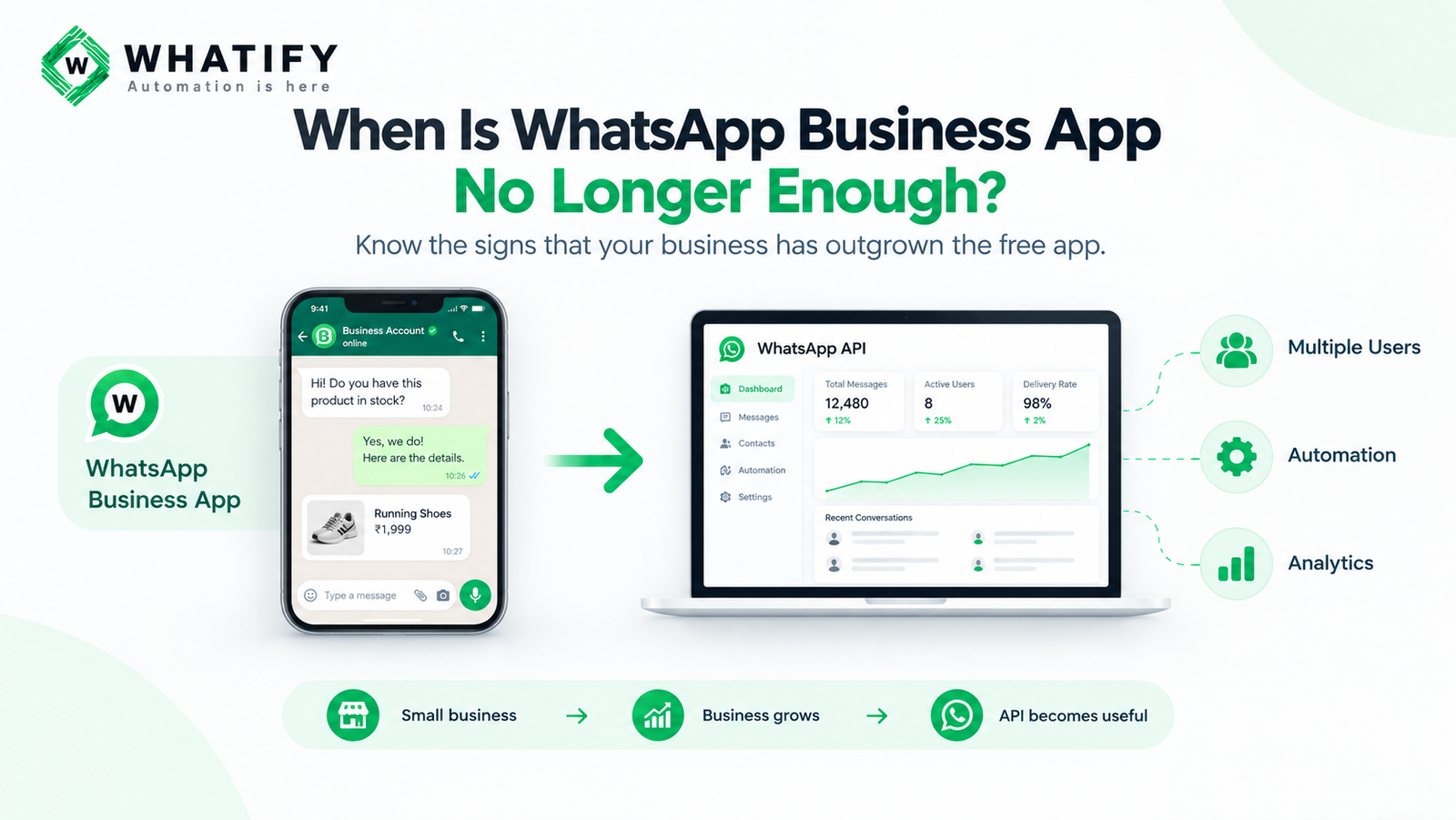
The free WhatsApp Business app is a good product. A single-location shop, a consultant, a small studio — many run entirely on it and should keep doing so. Paying for an API you do not need is a real waste, and plenty of businesses are sold one.
The question is not which is better. It is whether you have hit the specific limits the free app imposes.
What the free app does well
· Business profile with catalogue
· Quick replies, labels and away messages
· Broadcast lists to contacts who have saved your number
· Free to use, running on a phone
For low conversation volume with one or two people handling it, this covers the requirement.
Five signals you have outgrown it
1. Two people are replying to the same customer.
The free app has no assignment or ownership. Once collisions happen, they happen daily.
2. Your broadcast reaches a fraction of your list.
The free app's broadcast lists only deliver to people who have saved your number in their contacts. Most customers have not. This is the single most common reason businesses discover the free app cannot do what they assumed.
3. You need messages to send themselves.
Order confirmations, appointment reminders, renewal notices — anything triggered by an event in another system. The free app has no automation.
4. Losing the phone would be a business incident.
Conversation history on one device with no shared record is a genuine operational risk when a staff member leaves.
5. You cannot see what is working.
No campaign analytics, no delivery data, no attribution.
Hit two or more and the API likely pays for itself. Hit none and stay where you are.
For a fuller feature breakdown, see our comparison of the API and the Business app.
The option that is not an option
Between the free app and the official API sits a category of unofficial bulk sender tools promising WhatsApp mass messaging at low cost.
These automate the consumer or Business app rather than using the official API, which violates WhatsApp's terms. Bans are common and sending slowly does not reduce the risk, because the violation is the method rather than the volume. When the number goes, so does the history and the customer relationships attached to it.
Our post on bulk WhatsApp senders covers the distinction, and our account recovery checklist covers what happens afterwards.
What the API actually costs
Two components: a platform subscription and per-message charges.
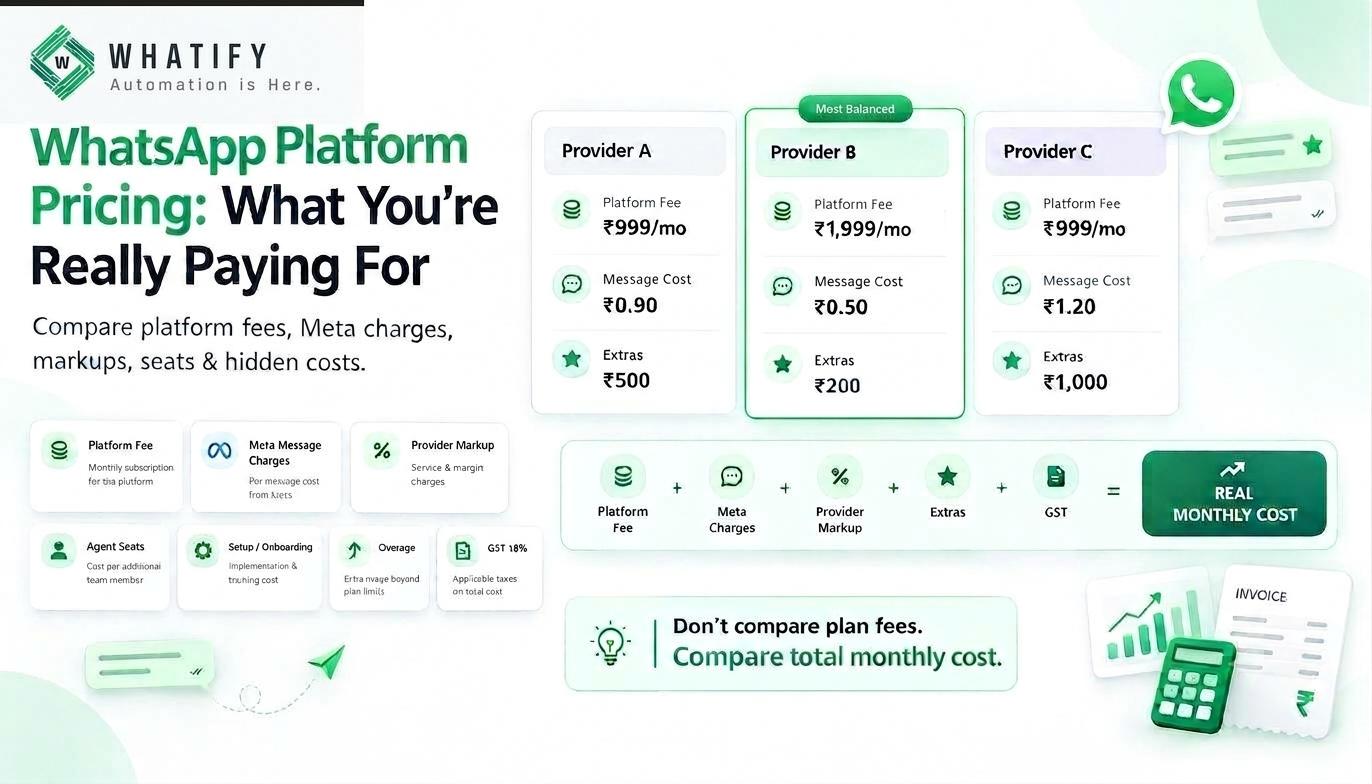
Whatify's published rates are ₹0.90 per marketing message, ₹0.50 per utility message and ₹0.30 per authentication message, exclusive of GST, with plan tiers starting free and moving up as usage grows — see the pricing page. Service replies inside the 24-hour customer window are not charged by Whatify.
A worked example: 2,000 utility messages a month on an entry paid plan is roughly ₹999 plus ₹1,000 in messages, about ₹2,360 with GST. Whether that is worthwhile depends entirely on what those 2,000 messages are doing. If they are order confirmations that reduce support calls and COD returns, it is inexpensive. If they are promotional blasts to a cold list, it is expensive at any price.
Our cost per message guide has fuller scenarios.
What you give up
Honest accounting:
· A cost that scales with volume, where the free app was flat
· Template approval — business-initiated messages must be pre-approved, so you cannot improvise a broadcast
· Setup effort — business verification, number registration, template creation
· Messaging limits — new accounts start at an entry tier and grow with usage
None are dealbreakers, but they are real, and a provider who describes the move as effortless is overselling it. See getting API approved in India for the process.
A reasonable decision rule
Stay on the free app if: one or two people handle everything, conversations are low volume, you do not need triggered messages, and broadcast reach is not a problem.
Move to the API if: three or more people need one number, you need messages triggered by orders or appointments, broadcast reach matters, or losing the device would be a serious problem.
Never use unofficial bulk tools. The saving is not worth the number.
Testing before committing
Most businesses can validate the decision cheaply. Whatify's 14-day free trial requires no credit card, and there is a free tier for very low volume. Connect one real workflow — order confirmations, or appointment reminders — and see whether it changes anything measurable before rolling out further.
Frequently Asked Questions
Often yes. If one or two people handle a low volume of conversations, you do not need automated triggered messages, and broadcast reach is not a constraint, the free app covers the requirement. Paying for API access you do not need is a genuine waste.
Broadcast lists in the free WhatsApp Business app only deliver to people who have saved your number in their contacts. Most customers have not, so a large part of your list never receives the message. This is the most common reason businesses discover the free app cannot do what they assumed.
When two or more of these apply: multiple people need to work one number, you need messages triggered automatically by orders or appointments, broadcast reach matters, losing the phone would be a business incident, or you need campaign analytics you cannot currently see.
No. They automate the consumer or Business app rather than using the official API, which breaches WhatsApp's terms and frequently results in the number being banned. Sending slowly does not reduce the risk, because the violation is the method rather than the volume.
A platform subscription plus per-message charges by category. As a worked example, roughly 2,000 utility messages a month on an entry paid plan comes to about ₹2,360 including GST. Whether that is good value depends on what those messages do for the business.
A flat cost becomes a variable one, business-initiated messages need pre-approved templates so you cannot improvise a broadcast, setup involves business verification and number registration, and new accounts start at an entry messaging tier that grows with usage.
Ready to automate your WhatsApp marketing?
Start your 14-day free trial today. No credit card required.
Start Free Trial